The cultural heritage of Balasore is a magnificent tapestry woven from threads of ancient spirituality, artistic expression, culinary mastery, and community traditions that have been nurtured and preserved across countless generations. As a district situated at the intersection of Odisha's coastal civilization and the broader cultural currents of eastern India, Balasore has developed a distinctive cultural identity that is simultaneously deeply rooted in Odia traditions and enriched by influences from neighboring Bengal, from the ancient maritime connections facilitated by the Bay of Bengal, and from centuries of interaction with traders and travelers from across India and beyond.
Understanding the culture and heritage of Balasore is essential for any visitor who wishes to experience the destination beyond its physical attractions. The temples, beaches, and natural wonders of the district are extraordinary in themselves, but they take on deeper significance when viewed through the lens of the cultural traditions that surround them. The vanishing sea at Chandipur is not just a geological phenomenon — it is woven into local folklore and spiritual understanding. The temples are not just architectural monuments — they are living centers of worship, community gathering, and artistic expression where traditions that date back centuries continue to evolve and thrive. The food of Balasore is not just sustenance — it is an expression of cultural identity, seasonal awareness, and the particular genius of Odia culinary philosophy.
In this guide, we explore the major dimensions of Balasore's cultural heritage: its festivals and celebrations, its culinary traditions, its art forms and handicrafts, its social customs and community life, and the influences that have shaped its unique character over the centuries. Our aim is not to provide an exhaustive academic survey but rather to offer travelers a meaningful introduction that will enrich their experience of the district and encourage deeper engagement with the people and traditions they encounter during their visit.
Festivals and Celebrations
Balasore's festival calendar is a year-round celebration of devotion, community, and the rhythms of nature and agriculture.
Rath Yatra — The Grand Chariot Festival
While the Rath Yatra (Chariot Festival) is most famously associated with Puri, where the colossal chariots of Lord Jagannath, Lord Balabhadra, and Devi Subhadra are pulled through the streets by thousands of devotees, the festival is celebrated with equal fervor and devotion throughout Balasore district. In fact, many towns and villages in Balasore have their own Rath Yatra celebrations, complete with locally crafted chariots, processions, devotional music, and community feasting. These local celebrations offer a more intimate and accessible experience than the massive crowds at Puri, while retaining the same spiritual significance and joyous atmosphere.
The Rath Yatra in Balasore typically takes place in June or July, according to the Hindu lunar calendar. Preparations begin weeks in advance, with communities coming together to build and decorate the chariots, prepare the temple deities for the procession, and organize the elaborate feasts that are an integral part of the celebration. The chariot construction itself is a remarkable display of traditional craftsmanship, with skilled artisans using techniques that have been passed down through families for generations. The chariots are built entirely from wood, without nails, and decorated with colorful fabrics, painted panels depicting scenes from Hindu mythology, and garlands of fresh flowers.
On the day of the Yatra, the entire community turns out to participate. The deities are ceremonially placed on the chariots, and the procession begins with the sound of cymbals, drums, conch shells, and the chanting of devotional hymns. Pulling the chariot rope is considered an act of great devotion and spiritual merit, and men, women, and children of all social backgrounds participate with equal enthusiasm. The atmosphere is electric — a combination of deep spiritual reverence and uninhibited communal joy that is one of the most moving spectacles in Hindu religious life. For visitors, witnessing a local Rath Yatra in Balasore is an unforgettable experience that offers genuine cultural immersion far removed from the organized tourism of more famous celebration sites.
Durga Puja — Art, Devotion, and Community
Durga Puja, the grand festival celebrating the goddess Durga's victory over the buffalo demon Mahishasura, is observed with extraordinary enthusiasm throughout Balasore district, typically in September or October. The festival, which lasts for approximately ten days (with the main celebrations concentrated in the last four days — Saptami, Ashtami, Navami, and Dashami), transforms the district into a vast open-air gallery of art, music, and devotional expression.
The centerpiece of Durga Puja celebrations are the pandals — elaborately designed temporary structures that house the beautifully crafted clay idols of Goddess Durga and her divine family. In Balasore, pandal-making has evolved into a competitive art form, with different neighborhoods and organizations vying to create the most spectacular and innovative structures. Some pandals replicate famous landmarks, others explore contemporary themes through art installations, and still others maintain traditional designs that evoke the timeless beauty of Odia artistic traditions. The craftsmanship invested in these temporary structures — which will be dismantled after the festival — is a testament to the community's dedication to artistic excellence and its understanding that true art is a form of devotion.
During Durga Puja, the streets of Balasore come alive with "pandal hopping" — the beloved tradition of visiting multiple pandals to admire their artistry and pay respects to the deity. Families dress in their finest clothes, street food stalls offer an incredible variety of snacks and sweets, and the night air resonates with the sounds of dhak (traditional drums), devotional songs, and the chatter of excited crowds. The immersion ceremony on Dashami (the tenth day), when the idols are carried in procession to the river for immersion, is a bittersweet event that marks the end of the celebration and the symbolic departure of the goddess. It is accompanied by music, dancing, and the application of sindoor (vermillion) by married women, creating a spectacle of color and emotion that is deeply moving even for those who do not share the religious tradition.
Nuakhai — The Harvest Festival
Nuakhai, which literally translates to "new eating" in Odia, is a harvest festival that celebrates the first eating of the new season's rice. While it is observed throughout Odisha, it has particular significance in the agricultural communities of Balasore, where rice cultivation is the primary livelihood for a large proportion of the population. The festival typically falls in August or September, coinciding with the ripening of the monsoon-season rice crop.
The Nuakhai celebration begins with the offering of newly harvested rice to the family deity, followed by a communal meal where every dish features the new rice prominently. It is a time for family reunions, with members who have migrated to cities and towns returning to their ancestral villages to participate in the celebration. The festival reinforces the deep connection between the people of Balasore and the agricultural cycle that has sustained them for millennia, and it serves as a reminder of the importance of food, gratitude, and community in Odia culture. For visitors, experiencing Nuakhai in a village setting offers an authentic and heartwarming glimpse into rural Odia life.
Other Notable Festivals
The festival calendar of Balasore extends well beyond these major celebrations. Makar Sankranti (January) marks the transition of the sun into the Capricorn zodiac and is celebrated with special foods, particularly sweets made from sesame and jaggery, and outdoor activities including kite flying. Dola Purnima (February/March), the Odia version of Holi, is celebrated with the spraying of colored water and powder, community bonfires, and the swinging of Radha-Krishna deities on elaborately decorated platforms. Raja Festival (June) is a unique Odia celebration that honors the earth as a feminine entity and celebrates womanhood; during the three-day festival, women and girls are excused from household chores and encouraged to play on swings, enjoy special foods, and celebrate their femininity. Kumar Purnima (October/November) is a festival particularly associated with unmarried girls, who observe rituals to invoke the blessings of the moon god for an ideal husband. Each of these festivals adds its own unique color and meaning to the cultural calendar, ensuring that there is almost always something to celebrate in Balasore.
The Culinary Heritage of Balasore
Odia cuisine is one of India's most refined and underappreciated culinary traditions, and Balasore is one of the best places to experience it in its full glory.
The Philosophy of Odia Cooking
Odia cuisine is characterized by a philosophy of balance, subtlety, and respect for the natural flavors of ingredients. Unlike some Indian regional cuisines that rely heavily on intense spicing or rich gravies, Odia cooking tends toward a more restrained and nuanced approach. The cuisine makes extensive use of mustard paste and mustard oil, panch phutana (a five-spice blend of cumin, mustard, fenugreek, fennel, and nigella seeds), fresh curry leaves, and a variety of indigenous herbs and greens that give each dish a distinctive character. The result is a cuisine that is simultaneously comforting and complex, familiar and surprising — a cuisine that reveals new dimensions with each meal.
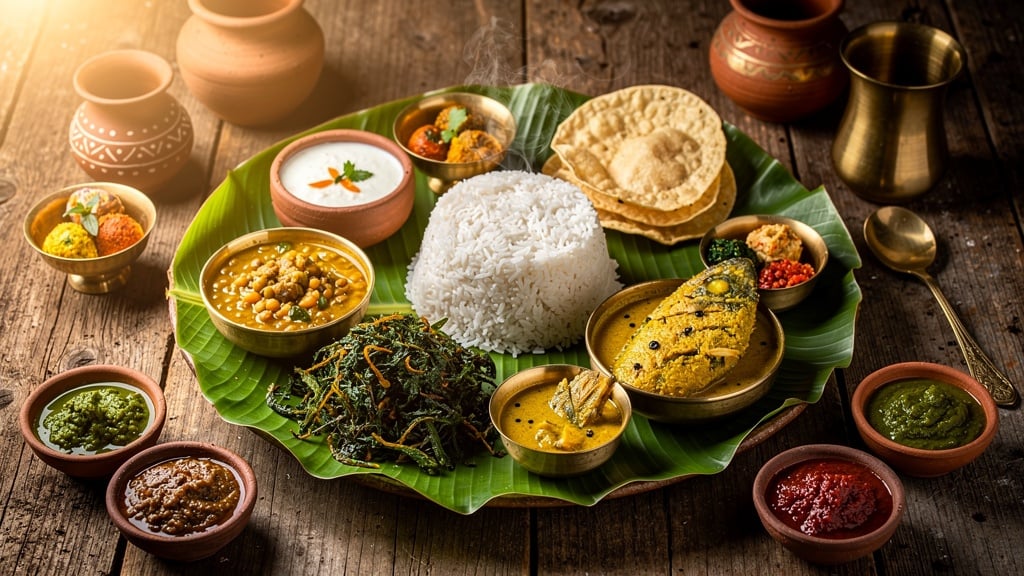
Rice is the undisputed staple of the Odia diet, and in Balasore's fertile river deltas, numerous varieties of rice are cultivated, each with its own texture, aroma, and culinary application. A traditional Odia meal (thali) revolves around rice, accompanied by an array of dishes that typically includes dal (lentil preparations), sabji (vegetable dishes), bhaja (fried items), besara (mustard-based preparations), chutney, pickle, and papad. Non-vegetarian additions — primarily fish, but also chicken and mutton — are common, particularly in Balasore where the proximity to the sea ensures a constant supply of fresh seafood. The traditional Odia thali is a masterwork of culinary composition, with each element complementing the others in terms of flavor, texture, and nutritional balance.
Signature Dishes You Must Try
Machha Besara (Fish in Mustard Sauce): This is arguably the signature dish of Odia cuisine and a preparation that reaches its highest expression in the coastal kitchens of Balasore. Fresh river or sea fish — typically rohu, katla, or pomfret — is cooked in a thick, pungent sauce made from ground mustard seeds, turmeric, green chilies, and a touch of curd. The mustard sauce, golden yellow in color and intensely aromatic, clings to the fish in a manner that is both visually appealing and deeply satisfying to eat. Each household has its own variation of the recipe, but the fundamentals remain constant: fresh fish, fresh mustard, and the patience to cook the sauce to exactly the right consistency.
Dalma: Dalma is a unique Odia preparation that combines lentils (usually toor dal or moong dal) with a variety of vegetables — raw banana, papaya, drumstick, pumpkin, and brinjal are common additions — cooked together with a tempering of panch phutana and coconut. The result is a thick, nourishing dish that is simultaneously a dal and a vegetable stew, offering a complex interplay of textures and flavors. Dalma is served in temples across Odisha as part of the sacred bhog (food offering) and is considered the quintessential comfort food of the Odia kitchen. It pairs perfectly with steamed rice and a drizzle of ghee.
Pakhala Bhata (Fermented Rice): Pakhala Bhata is perhaps the most distinctive and culturally significant dish in the Odia culinary repertoire. Cooked rice is soaked in water overnight, allowing it to undergo a mild fermentation that gives it a characteristic tangy flavor and cooling properties. The fermented rice is then served cold, typically with accompaniments such as fried fish, saga bhaja (fried greens), badi chura (crushed lentil dumplings), onion, green chili, and a drizzle of mustard oil. During the hot summer months in Balasore, pakhala is consumed at midday by virtually every household, from the humblest to the most affluent. It is believed to cool the body, aid digestion, and provide sustained energy through the hottest part of the day. For visitors, trying pakhala is an essential cultural experience that connects them with one of Odisha's most beloved culinary traditions.
Chhena Poda (Baked Cheese Dessert): Chhena Poda, literally "roasted cheese," is a dessert unique to Odisha that has no equivalent in any other Indian regional cuisine. Fresh chhena (cottage cheese) is mixed with sugar, cardamom, and sometimes raisins, then baked slowly over a wood fire until the exterior develops a dark, caramelized crust while the interior remains soft, moist, and intensely flavored. The contrast between the smoky, almost burnt exterior and the sweet, creamy interior is extraordinary — a play of flavors and textures that is utterly addictive. Chhena Poda is available at sweet shops throughout Balasore, but the best versions are often found at small, unassuming shops in the towns and villages where it is made fresh daily using traditional methods.
Street Food Delights: Balasore's street food scene is vibrant, diverse, and incredibly affordable. Gupchup (the Odia version of pani puri or gol gappa) features crispy hollow spheres filled with spiced mashed potato and bathed in a tangy, mint-infused water that is distinctively Odia in its flavor profile. Dahi Vada — fried lentil dumplings soaked in creamy yogurt and topped with tangy tamarind chutney and ground spices — is another street food staple that reaches exceptional quality in Balasore. Bara (fried lentil cakes), aloo dum (spiced potato curry served with flatbread), and chaat (a generic term for savory snack mixtures) are available at roadside stalls throughout the district, each offering a delicious and authentic taste of local culinary culture at remarkably low prices.
Art Forms, Dance, and Handicrafts
Balasore's artistic traditions encompass classical dance, folk performance, textile weaving, and religious art that has been refined over centuries.
Gotipua Dance — The Precursor to Odissi
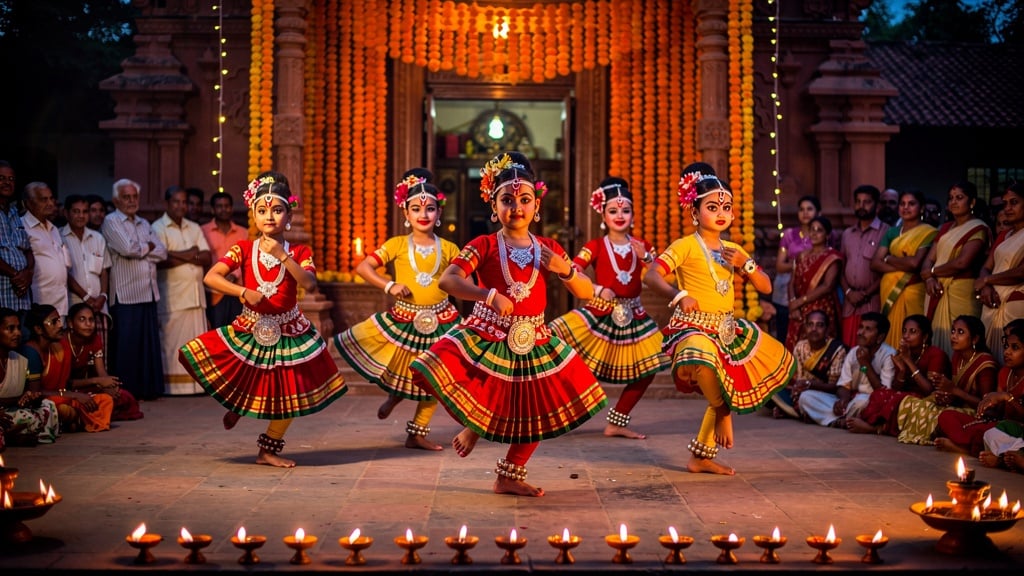
Gotipua is a traditional dance form of Odisha in which young boys, dressed as girls in elaborate costumes, makeup, and jewelry, perform acrobatic and devotional dances that depict stories from Hindu mythology, particularly the legends of Radha and Krishna. This art form, which has its roots in the temple dance traditions of Odisha dating back several centuries, is considered the direct precursor to Odissi — one of India's eight recognized classical dance forms. In Balasore and the surrounding districts, Gotipua troupes continue to perform at temples, festivals, and cultural events, maintaining a tradition that has survived the passage of centuries and the changing currents of taste and fashion.
The training of Gotipua dancers begins at a very young age, typically around five or six, and requires years of disciplined practice to master the demanding combination of rhythmic footwork, expressive hand gestures (mudras), facial expressions (abhinaya), and acrobatic elements such as backbends, splits, and headstands that characterize the form. The performances are accompanied by traditional Odia music featuring the mardala (a barrel-shaped drum), harmonium, and violin, along with vocal renditions of devotional poetry. For visitors to Balasore, attending a Gotipua performance is a rare opportunity to witness a living artistic tradition that directly connects to the ancient temple culture of Odisha and provides insights into the evolution of one of India's most beautiful classical dance forms.
Odissi — The Classical Dance of Odisha
While Gotipua is the folk foundation, Odissi is the classical pinnacle of Odia dance tradition. Recognized as one of the eight classical dance forms of India, Odissi is characterized by its fluid, sculpture-like poses (tribhanga — the three-bend posture), intricate footwork, expressive storytelling through gesture and facial expression, and deep spiritual content drawn from Vaishnavite devotional literature. The dance form traces its origins to the Natya Shastra (the ancient Indian treatise on performing arts) and the temple sculptures of Odisha, particularly those at the Konark Sun Temple and the Jagannath Temple in Puri, which depict dancers in poses that are identical to those performed by Odissi dancers today.
In Balasore, Odissi dance is taught at several cultural institutions and private academies, and performances are regularly staged at temples and cultural events, particularly during major festivals. The annual cultural programs organized during Durga Puja, Raja Festival, and other celebrations frequently feature Odissi performances by both established artists and promising students. For visitors interested in Indian classical dance, attending an Odissi performance in its cultural homeland of Odisha provides a context and authenticity that cannot be replicated on stages elsewhere in the world.
Textile Traditions and Handloom Weaving
Odisha has a rich tradition of handloom weaving that produces some of the most beautiful textiles in India, and Balasore district contributes to this tradition with its own distinctive weaving heritage. The Sambalpuri saree, with its characteristic ikat (tie-dye) patterns, is perhaps the most internationally recognized product of Odia weaving, but the textile traditions of the Balasore region include a wider range of products, including the Balasore tussar silk, cotton weaves for daily wear, and specialized fabrics used in temple rituals and festival costumes.
The weaving communities of Balasore, primarily concentrated in certain villages and neighborhoods, maintain traditional handloom techniques that produce fabrics of extraordinary quality and beauty. The process of creating a single handloom saree can take anywhere from a few days to several weeks, depending on the complexity of the design and the fineness of the weave. Many weavers use natural dyes derived from plants, minerals, and insects, producing colors that are subtle, enduring, and environmentally sustainable. Visiting a weaving village and watching artisans at work is a fascinating experience that reveals the extraordinary skill, patience, and artistic vision that goes into each piece of handloom fabric. For travelers who appreciate textiles, purchasing a handloom piece directly from the weaver is both a meaningful souvenir and a direct contribution to the preservation of this important cultural tradition.
Pattachitra — Scroll Painting Tradition
Pattachitra, literally meaning "cloth painting," is a traditional art form of Odisha that involves creating intricate narrative paintings on specially prepared cloth or dried palm leaves. These paintings typically depict scenes from Hindu mythology — particularly the legends of Lord Jagannath, the Ramayana, and the Mahabharata — using a vivid palette of natural colors and a distinctive style characterized by bold outlines, decorative borders, and meticulous attention to detail. The Pattachitra tradition has been practiced in Odisha for centuries, with master artisans (chitrakars) passing their skills from generation to generation.
In Balasore district, Pattachitra artists continue to practice their craft, creating works that range from small paintings suitable for framing to large narrative scrolls that can stretch several meters in length. The process of creating a Pattachitra involves multiple stages: preparing the canvas (cloth is stiffened with a mixture of chalk and tamarind seed paste), creating the initial drawing, applying colors (traditionally derived from natural sources such as conch shells, lamp soot, and various minerals), and adding the fine details and borders that give each painting its distinctive character. The patience and precision required for this work is extraordinary — a single painting can take weeks or even months to complete.
For visitors interested in acquiring Pattachitra works, the best approach is to visit the workshops of active artisans, where you can observe the creation process and purchase directly from the artist. This not only ensures authenticity but also allows you to commission custom works and to learn about the symbolism and stories embedded in each painting. The Odisha State Emporium in Balasore town also stocks a selection of Pattachitra works, though the range is generally more limited than what you would find by visiting artisans directly.
Other Artistic Traditions
Beyond dance, textiles, and painting, Balasore's cultural landscape includes numerous other artistic and craft traditions. Dhokra metal casting, an ancient lost-wax technique practiced by tribal artisans, produces distinctive brass figurines, jewelry, and decorative objects with a raw, earthy aesthetic. Sabai grass weaving produces functional and beautiful baskets, mats, and decorative items from locally harvested grass. Stone carving, though less prevalent than in the temple towns of southern Odisha, continues as a living tradition, with artisans producing both religious sculptures and decorative pieces. Appliqué work, the art of creating decorative textiles by sewing cut-out pieces of fabric onto a base cloth, is used to produce the elaborate canopies, flags, and decorations that adorn temples and festival venues throughout the district.
"The culture of Odisha is not preserved in museums — it lives and breathes in the daily life of its people, in the temples where priests chant mantras composed a thousand years ago, in the kitchens where grandmothers cook recipes handed down through generations, and in the festivals where the entire community comes together to celebrate the timeless rhythms of devotion and joy."
— A reflection on Odia cultural heritage
Social Customs and Community Life
The social fabric of Balasore is characterized by a strong sense of community, deep respect for elders and traditions, and a warmth of hospitality that visitors consistently find remarkable. The concept of "Atithi Devo Bhava" — "the guest is god" — is taken literally in most Odia households, where visitors are welcomed with refreshments, conversation, and genuine interest, regardless of the hour or the inconvenience. This hospitality is not performative — it is a deeply ingrained cultural value that reflects the Odia understanding that human connection is one of life's highest purposes.
Community life in Balasore revolves around several key institutions: the family (which typically operates as an extended unit, with multiple generations sharing a household), the temple (which serves as both a spiritual center and a community gathering place), the village or neighborhood association (which organizes festivals, resolves disputes, and manages community resources), and the marketplace (where economic transactions are intertwined with social interactions and the exchange of news and gossip). Understanding these institutions and their interrelationships provides visitors with a framework for making sense of the social dynamics they observe and for engaging with local people in a respectful and meaningful way.
The people of Balasore speak Odia, one of the classical languages of India with a literary tradition dating back over a thousand years. The district's location near the West Bengal border means that Bengali is also widely understood, and Hindi and English are spoken by educated residents, particularly in urban areas. For travelers, learning a few basic phrases in Odia — "Namaskar" (hello), "Dhanyabad" (thank you), "Bhala" (good) — goes a long way toward establishing rapport and demonstrating respect for local culture. The warmth and enthusiasm with which people respond to even halting attempts at their language is one of the enduring pleasures of traveling in Odisha.
Experience Balasore's Culture Firsthand
The best way to experience Balasore's culture is to engage with it directly — attend a festival, share a meal with a local family, watch an artisan at work, or simply sit at a roadside tea stall and absorb the rhythm of daily life. Our Travel Guide includes practical tips on how to find cultural experiences during your visit, and our Places to Visit guide highlights the temples and sites where these traditions are most visibly expressed.
Ready to Experience Balasore's Living Heritage?
Plan your journey with our comprehensive travel guide — including tips on festivals, cultural events, and local experiences.
View the Travel Guide